Marshall Lochbaum

Job Role

Flag of the United States
Marshall Lochbaum

Role Summary

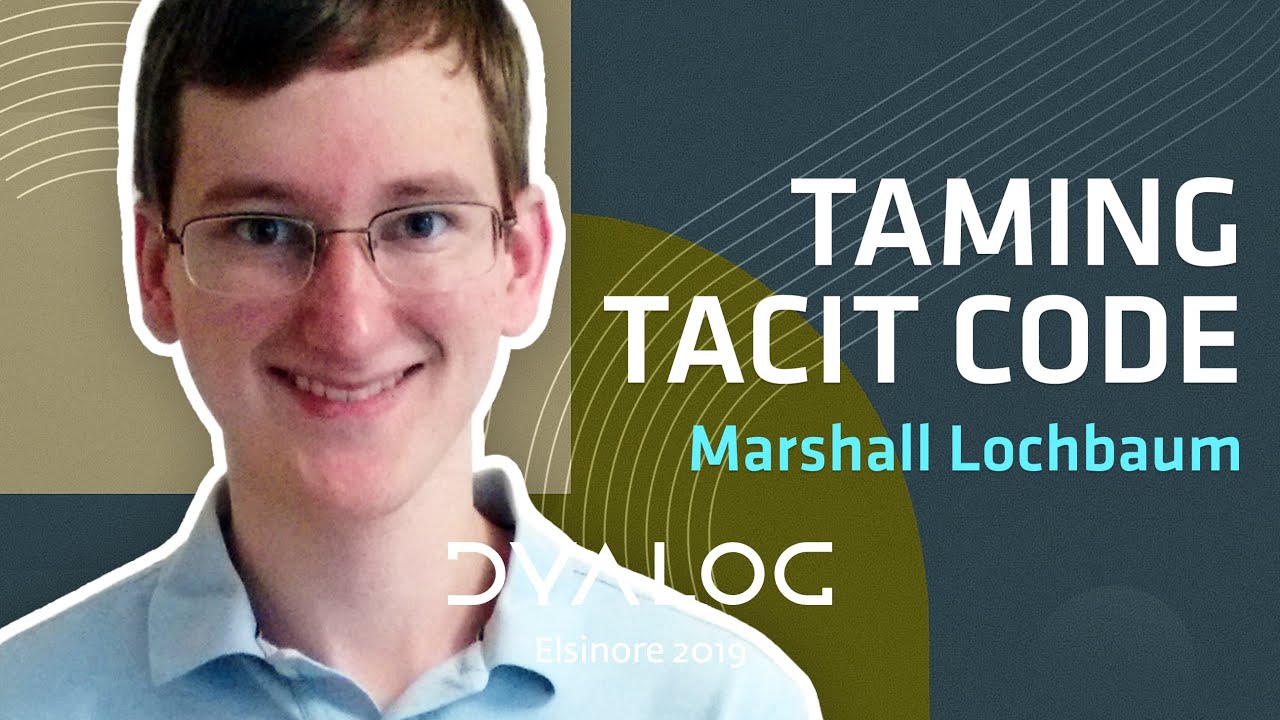
Marshall Ward Lochbaum is an array language programmer and implementer with a background in J and Dyalog APL. He is the designer of I, BQN, and (with dzaima) Singeli. His work on and publications about Dyalog and BQN often deal with high-performance primitive implementations, particularly with vector instructions. He was a panellist on the Array Cast from 2022 to 2025 and has been a significant contributor to the APL Wiki.

Biography

Born in Raleigh, North Carolina in 1993, Lochbaum attended Raleigh Charter High School where he was taught J by Henry Rich. He continued programming in J as a hobbyist and in summer jobs at ThomasNet (where he assisted in creating Jsoftware product Jd) and BEST, llc. Lochbaum attended the University of North Carolina at Chapel Hill, graduating with majors in mathematics and computer science in winter 2014 and again with a master’s degree in computer science in 2016. He created the I programming language, incorporating tacit functional and array programming concepts, in 2012.

From February 2017 until June 2020, he worked as a software developer at Dyalog Ltd., mainly on speeding up the implementation of Dyalog APL, but also on language development and the additions of Dyalog APL 18.0 in particular. He frequently hosted workshops and gave presentations at Dyalog user meetings. At this time he developed the Structural Under concept, which although not added to Dyalog was published through Adám Brudzewsky’s Extended Dyalog APL.

Tolerated Comparison, Part 2

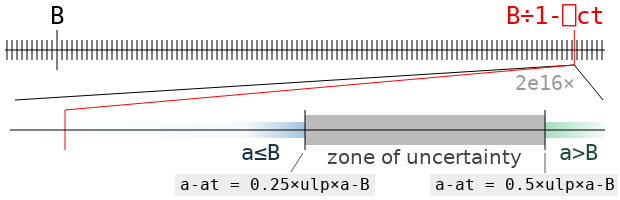
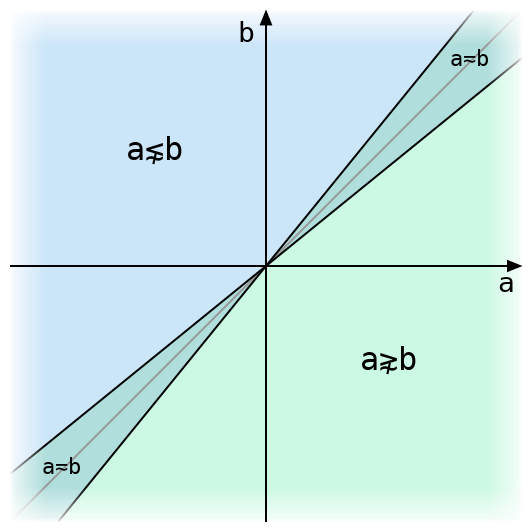
This post might be more difficult than our usual fare. You won’t find any interesting APL coding insights here—instead we’ll be focused on the... Read

Speed versus Accuracy: the User’s Choice

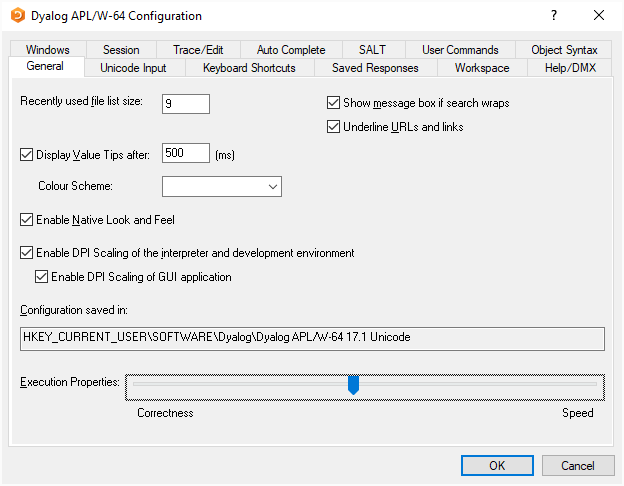
At Dyalog we have long striven for both correctness and high performance in our implementation. However, our views on this matter have recently undergone an... Read

Tolerated Comparison, Part 1

Warning: The formula for “tolerated” comparison in this post is not correct for actual floating-point numbers. Do not use it! The follow-up post... Read
Implementing Reduction

Implementing Reduction

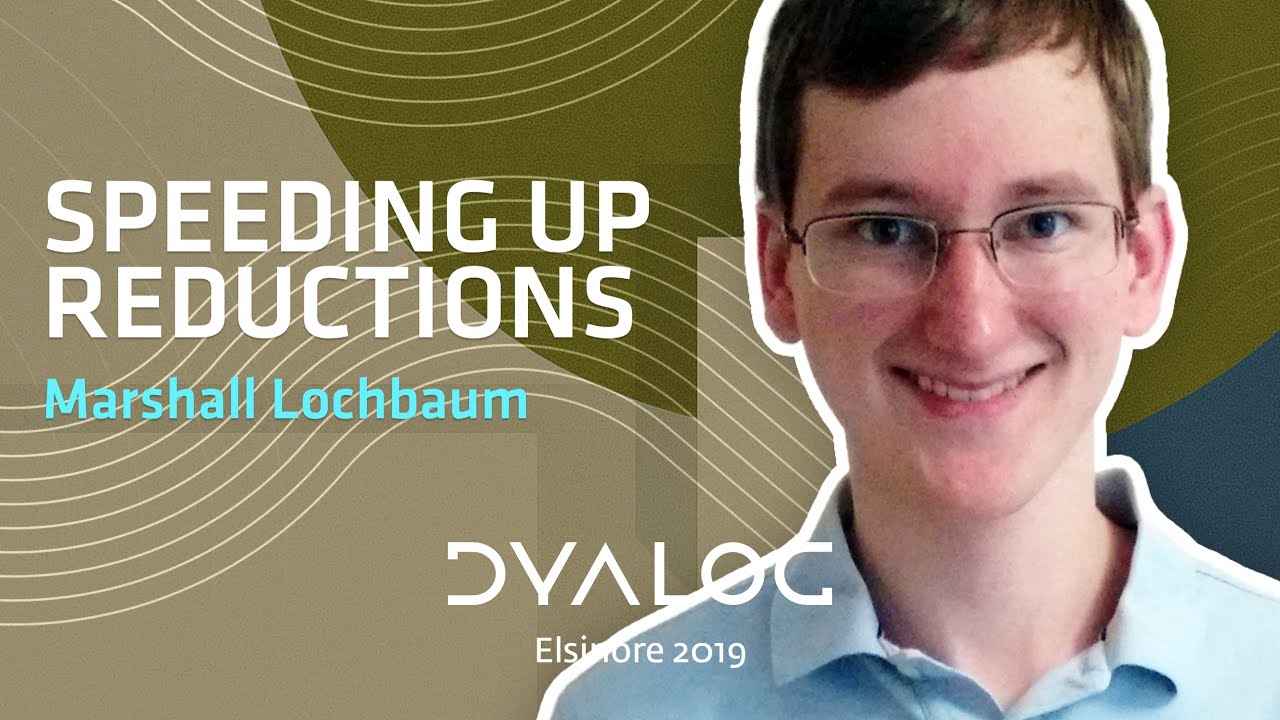
Marshall provides an overview of the techniques used to quickly implement arithmetic and logical reductions on simple arrays. Topics include classifying reductions by shape, reordering reductions, vectorisation and shortcutting....View

/

Tacit Techniques with Dyalog version 18.0 Operators

Tacit Techniques with Dyalog version 18.0 Operators

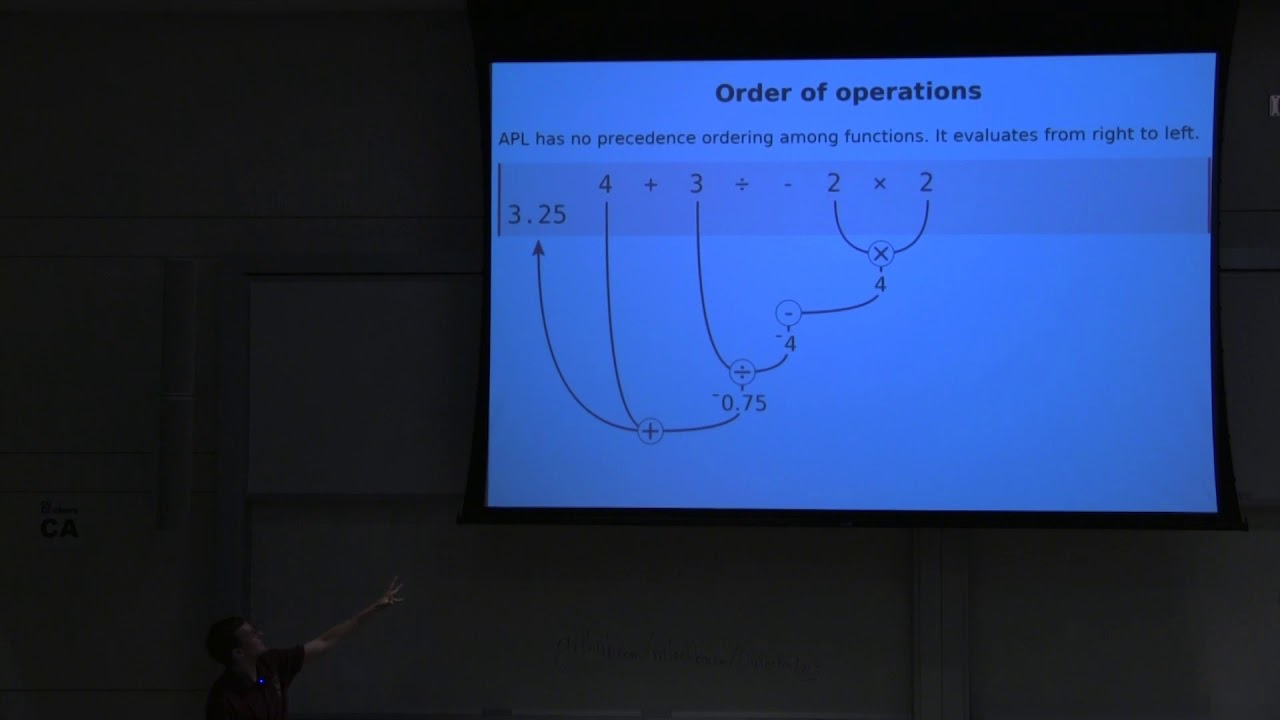
"Tacit" programming is a paradigm in which the programmer, rather than writing a dfn or tradfn that explicitly references arguments, builds a single derived function and relies on operators and trains to control the flow of arguments. While purely ta...View

/

Outer Product as an Introduction to APL and a Pretty Cool Thing in General

Outer Product as an Introduction to APL and a Pretty Cool Thing in General

"So it's just like a multiplication table, right?" APL's outer product isn't a complicated tool. But you may find yourself surprised by its depth as we use it to explore array programming, point-free Haskell, fractals, and high-speed language impleme...View

/

Sub-nanosecond Searches Using Vector Instructions

Sub-nanosecond Searches Using Vector Instructions

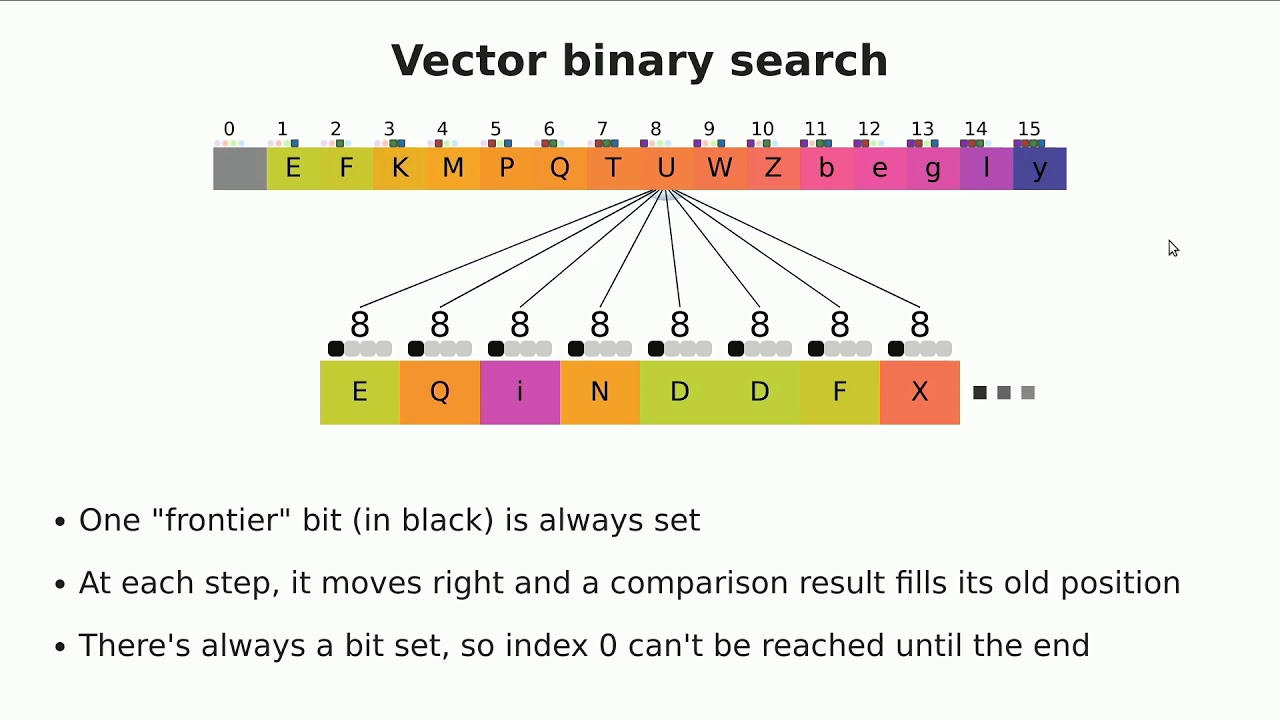
Concentrating on Membership and Index-Of, Marshall describes some big performance improvements for a future Dyalog release, including novel vectorised algorithms that can sometimes perform set or index look-ups on integer vectors at under a nanosecon...View

/

The Interpretive Advantage

The Interpretive Advantage

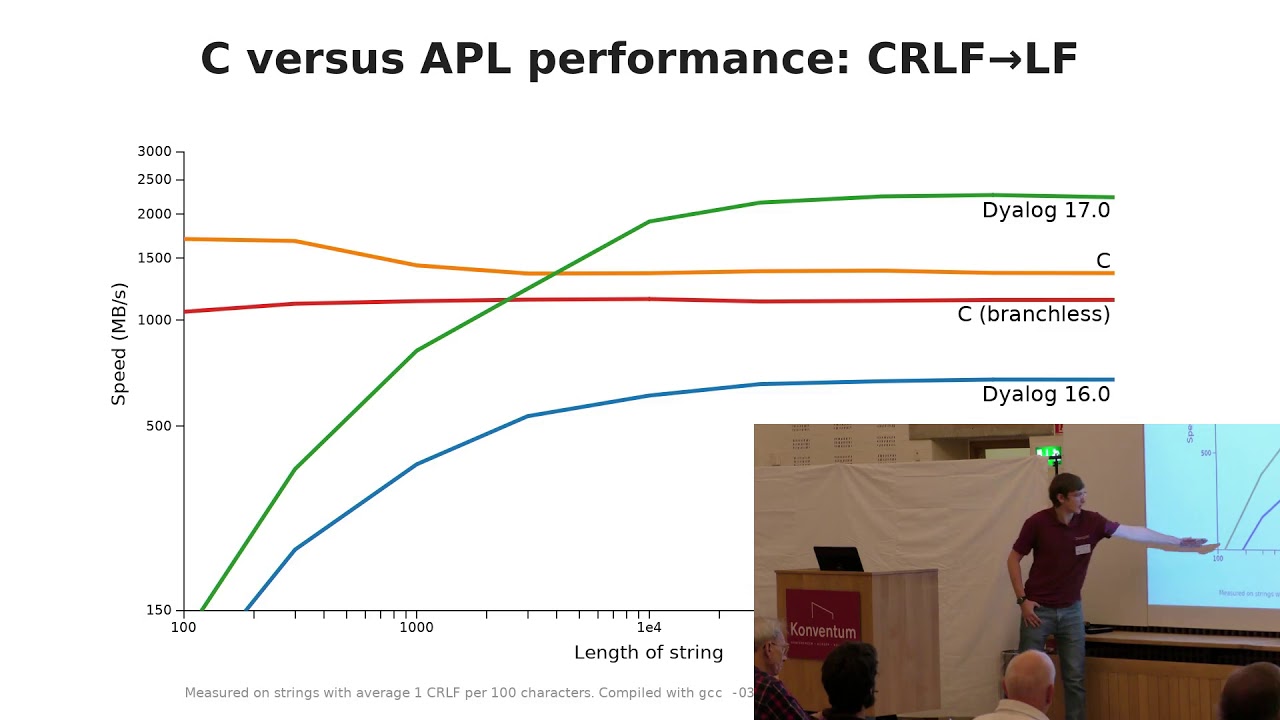
Common wisdom is that compiled languages are faster, full stop. However, by testing data for common patterns at runtime, Dyalog can sometimes perform ordinary programming tasks many times faster than well-optimised C. Marshall explains some of the wa...View

/

Moving Bits Faster in Dyalog 16.0

Moving Bits Faster in Dyalog 16.0

Marshall, the most recent and youngest member of Team Dyalog, has been instrumental in implementing performance improvements relating to the manipulation of Boolean arrays. Primitive functions already performed faster on Booleans than on one-byte int...View

/

Meet the Dyalog Team

We’re a small team spread across half a dozen countries, united by a shared belief that powerful software doesn’t have to be complicated. A lot of us have been here for years, some for decades, because there’s still no shortage of interesting problems to solve.

Martin Franck
Martin
IT Co-ordinator
Flag of Denmark
Karen Shaw
Karen
Customer Account Manager
Flag of the United Kingdom
Jada Andrade
Jada
Administration Assistant
Flag of the United Kingdom
Brandon Wilson
Brandon
Developer
Flag of Japan

…or perhaps even join the team!