The Dyalog Community
A Community for People Who Feel Differently About Code
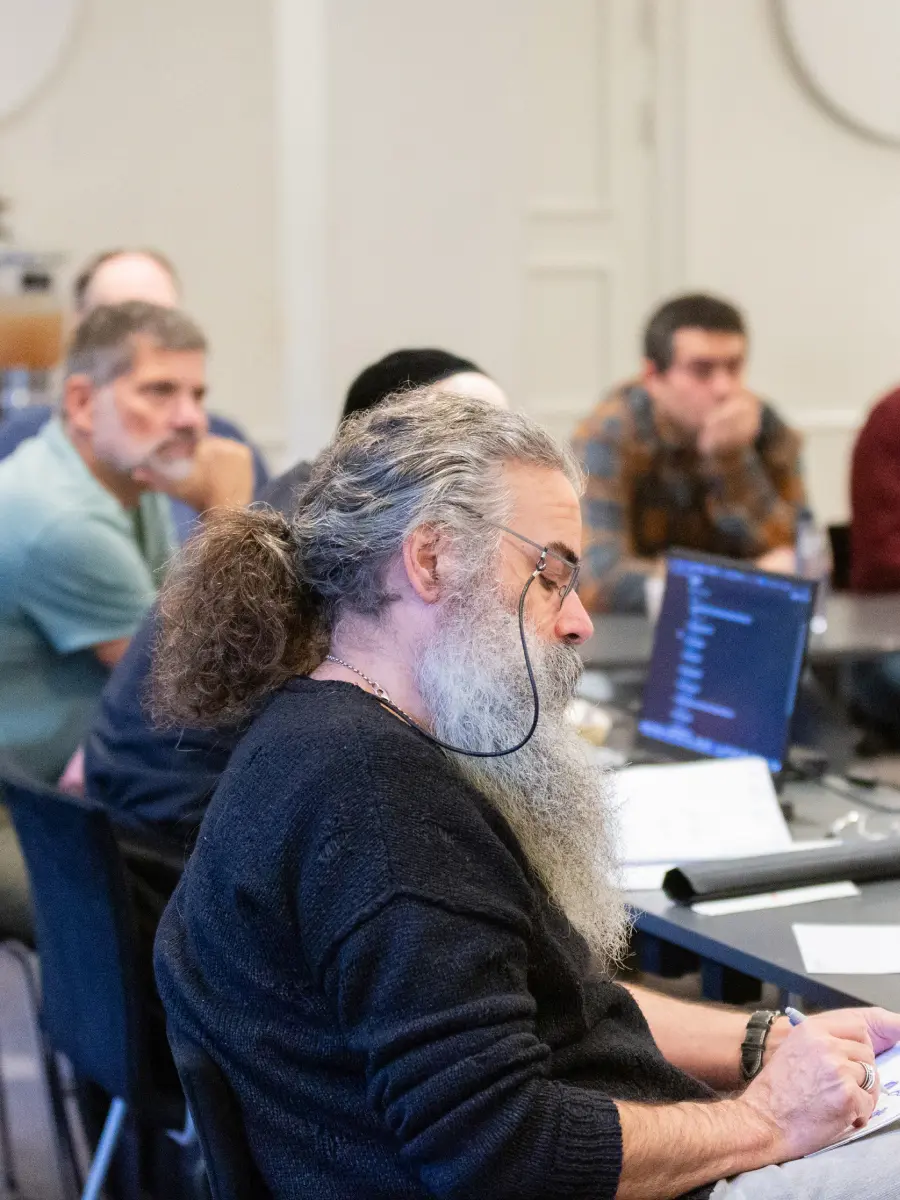
The Dyalog and APL community is a global group of developers, researchers, and problem-solvers united by a language that treats computation as a tool of thought. Whether you’re just starting or have decades of experience, you’ll find people sharing ideas, helping each other, and building interesting things.

Highly Engaged
Smaller than some language communities, but very active. Questions get answered quickly, ideas get discussed in depth, and people turn up to help. Newcomers are welcomed, and experts are generous with their time.

Cross-generational
From Ken Iverson’s original notation to the many contributors that are extending it today, the community spans decades. Long-time users and newcomers learn side by side, keeping APL’s history alive while moving the language forward.
Academia Meets Industry
Researchers, financial engineers, data scientists, and hobbyists share the same spaces, and the overlap makes for unusual conversations; a question about a trading system might be answered by someone thinking about compilers or mathematics!
A Tool of Thought
APL began as a notation for thinking about computation, not just writing it, so discussions tend to go deeper than syntax. People talk about how to see a problem clearly and express it elegantly, rather than only concentrating on how to make the code run.
Talk Directly to the People Who Build and Teach APL
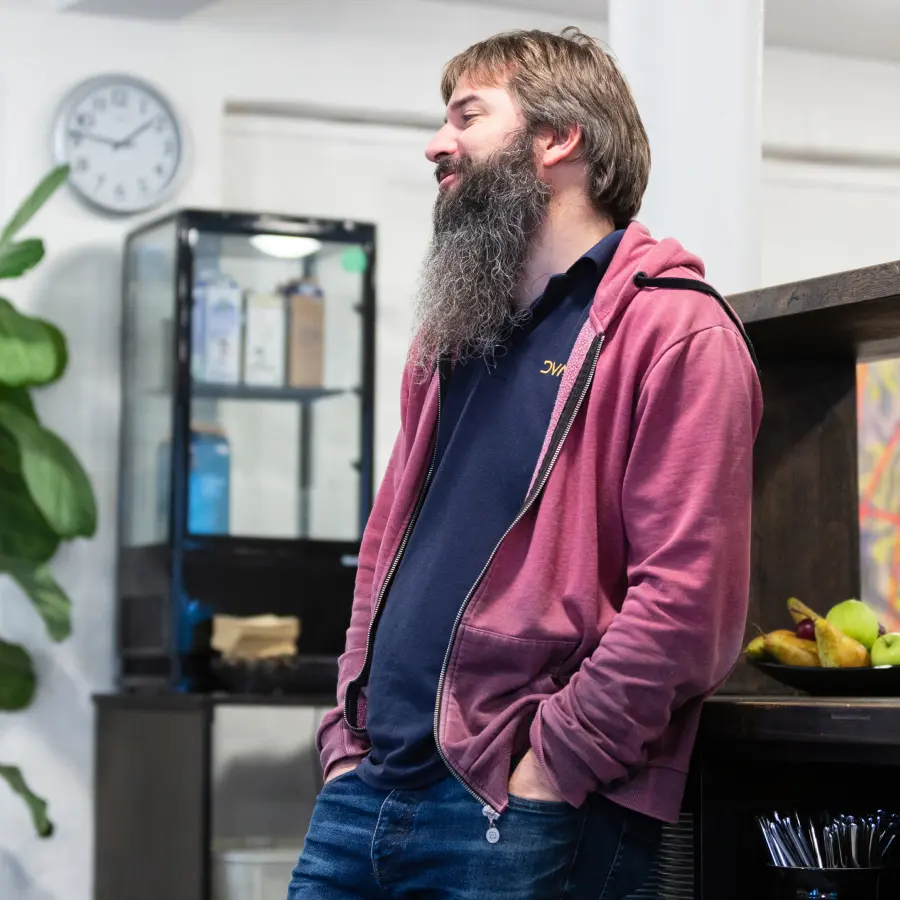
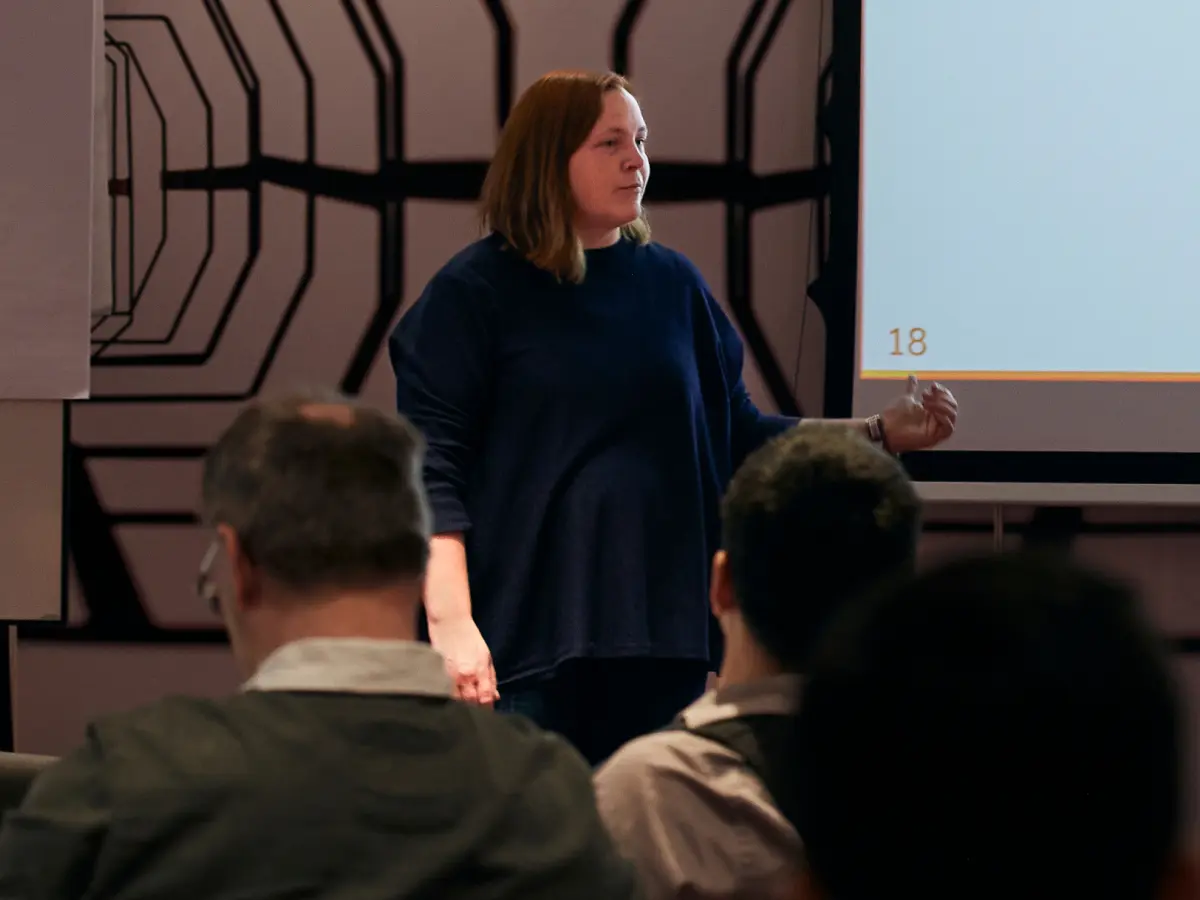
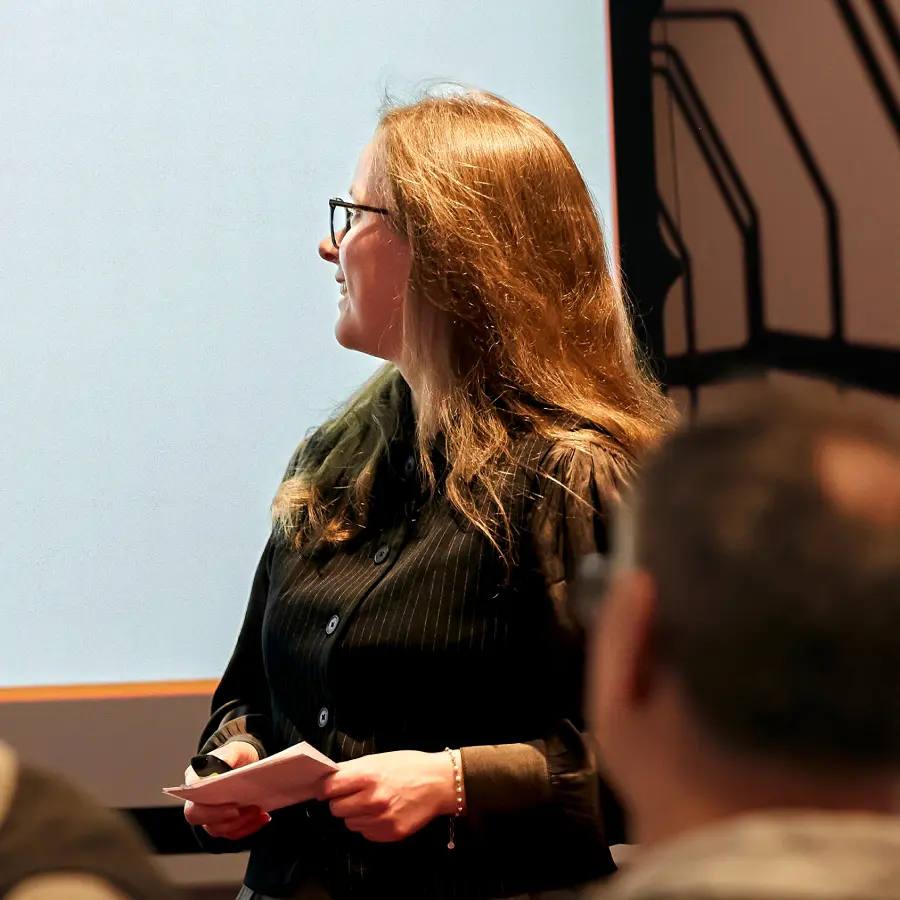
Many of Team Dyalog are regulars in the APL and array programming world. You’ll find them at conferences, on the forums, and in community chat, and you can ask them questions directly. Here are a few of the people you’re likely to meet.
Aaron Hsu
Adám Brudzewsky
A lifelong APL programmer, Adám helps shape the language through design work, teaching and tools, making it more expressive without breaking existing code.
He contributes to the APL Wiki, maintains APLcart, is a regular on the APL Orchard and APL Farm, and co-hosts ArrayCast.
Rich Park
Stefan Kruger
Stefan works on making Dyalog easier to pick up, with a focus on tooling such as Ride and macOS support.
He wrote Learning APL, edited APL Cultivations, and speaks at Dyalog user meetings and DYNA events, with an emphasis on using Dyalog with AI.
Where the Conversation Happens
Ask a question, share what you’re developing, or meet people in person.
Long-form discussion, troubleshooting, and announcements.
Our conference of presentations and workshops on APL in practice, held every two years. There are also two DYNA events in the USA each year (one in years that also have a Dyalog user meeting).
An overview of the upcoming events within the APL community and access to materials from Team Dyalog’s participation in previous events.
National, regional, and international groups, many with regular meetings.
Our competition for newcomers, with short problems to solve as you learn.
Our project competition, with two categories: one for things built in APL, and one for tools and libraries built for APL.
News, technical articles, and stories from the team and the wider community.
Busy chat server for APL and other array languages.
Long-running Stack Exchange chat room, good for quick questions.
Questions tagged with “APL” or “Dyalog”.
Subreddit for APL, J, K, and related languages.
Podcast about array programming, co-hosted by members of Team Dyalog.
Community-maintained encyclopedia of APL, open for anyone to contribute to.
Resources
Everything you need to learn, write, and look things up in APL.
Reference guides and Release Notes.
User meeting presentations, tutorials, and webinars.
Announcements, releases, updates from Dyalog, and so on.
Quick answers to common questions about APL and Dyalog.
Searchable collection of idioms and expressions.
Run Dyalog in your browser (no installation needed).
Fonts that display every APL glyph.
Physical keyboards and layouts for typing APL.
Research papers and articles about APL.
Join Our Growing GitHub Community!
Stay updated with our latest projects, contribute to open-source initiatives, and connect with like-minded developers. Your support helps us continue to innovate and share valuable resources with the programming world.
Avatars shown are public GitHub profile images of users who follow Dyalog Ltd. Each image links to the corresponding GitHub profile. If you’d like your avatar to be removed from this page, contact us at contact@dyalog.com