User Presentations
U01: Feeding Children with APL summary | slides (link) | video (22 mins)
Tommy Johannessen Jersie Data ApS (Denmark)
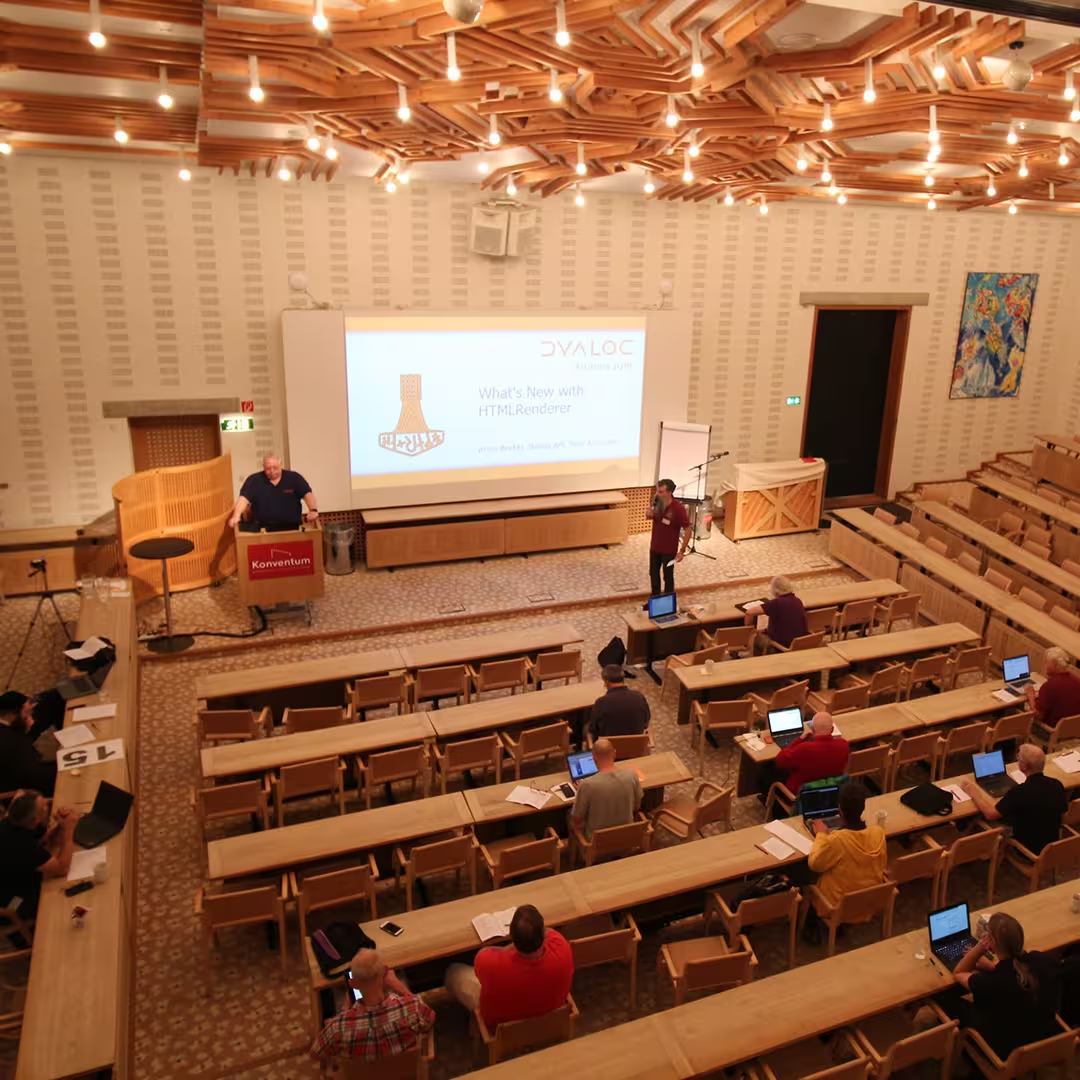
Tommy tells us how APL helps feed children in Denmark, in the form of a Dyalog application that runs under Microsoft IIS. For 15 years, he has survived changing business and technical requirements, and a quarter of a million kids have been fed!
U02: A Git Workflow for Dyalog APL summary | video (46 mins)
Paul Mansour, The Carlisle Group (U.S.A.)
Git is great, but the newcomer can easily drown in a sea of commands and options. Git doesn't tell you when or why to branch, when or why to merge or rebase, how to version your project or prepare a release. AcreFlow is a radically simplified Git workflow that answers these questions. It is implemented in Dyalog APL so you can branch, commit, and put out new versions directly from the APL session.
U03: Lessons for the Masses from the Trenches of Co-dfns summary | slides (PDF) | video (22 mins)
Aaron Hsu, Indiana University (U.S.A.)
Besides representing an easy way to do GPU programming in APL, the Co-dfns compiler also represents a novel, and somewhat stark, lesson on the nature of software performance, implementation and design. The compiler itself has always been designed not only to perform well on yesterday’s hardware, but also on the fine-grained parallel hardware of today and tomorrow, and to do so without the assumed costs of implementation and human-labour overheads usually associated with creating high-performance parallel code in more mainstream programming languages.
Recent benchmarking of the Co-dfns compiler has revealed much more than could have been originally anticipated when the project began, and the lessons on software design and implementation are as hopeful as they are shocking. The innovative philosophy of design of the Co-dfns compiler presents practical vectors of attack against the ever-growing problem of Software Obesity, in which software is not only difficult to write and debug, but also difficult to get performing as well as it could.
Fortunately, these lessons are not specific to the Co-dfns compiler, or even its type of program. Instead, these lessons are easily extrapolated to apply to design principles that have permeated the entire swath of programming problems and industries.
U04: TamStat 2019 summary | slides (PDF) | video (16 mins)
Richard Park
Stephen Mansour has presented his APL-based statistics framework, with a focus on teaching statistics to undergraduates, at several previous user meetings. This year, Richard presents the latest updates to the TamStat graphical interface with examples.
U05: TamStat 2019 – Technical Update summary | slides (PDF) | video (20 mins)
Michael Baas
Michael presents a more technical view of TamStat's implementation and demonstrates a few interesting details behind recent features.
U06: An Update on Mystika summary | slides (PDF)
Erik Wallace, Harbin Engineering University (China)
At Dyalog '18, Erik introduced the Mystika project, which includes a big number library, and cryptographic suite written in APL. In this presentation Erik demonstrates some of the new features of Mystika and presents some preliminary timing statistics. He also explains why the big number library might be useful outside cryptography to other users of the Dyalog interpreter.
U07: Web Enabling SimCorp Dimension summary | slides (PDF) | video (36 mins)
Stig Nielsen, SimCorp (Denmark)
As our customers are demanding services rather than software installed on premise, SimCorp has started the journey to transform SimCorp Dimension into a 3-tier solution, preparing for launching a full web-frontend version of the system. SimCorp Dimension consists of both APL and C# code, where APL is the "driver" for the entire system. Stig will take you through one of the major architectural changes that will take advantage of the "multi-concurrency" features of Microsoft.NET while at the same time continuing to use APL where much of the business logic resides.
U08: Getting to Know Each Other by…Sharing Code summary | slides (PDF) | video (26 mins)
Francesco Garue, SimCorp Italiana (Italy)
Since APL Italiana became part of SimCorp two years ago, there have been many opportunities to co-operate; we mainly shared knowledge, both between consultants and programmers. Francesco's team has been the only one, until now, to take part in a pioneering project that involves sharing a big chunk of code. He describes the origin of this project, a few bumps along the way and the current architecture of the solution.
U09: A Transaction-based Portfolio Management System in Dyalog-APL using .NET summary | slides (PDF) | video (29 mins)
Claus Madsen, FinE Analytics (Denmark)
Scrinium is a portfolio management system that can handle a comprehensive range of assets – Shares including Investment Companies and Holding Companies, Mortgages, Municipal and Corporate Bonds, Mutual Funds, Hedge Funds, Options, Warrants, Currency and Commodity based instruments, Subscription Rights, the list goes on. The system can compute returns (SR, ANN, TWR), risk (Std, VaR, Duration, Convexit, Delta, Gamma, Sharpe) and relative risk (Alpha, Beta, Jensens Alpha, Tracking Error) and deals with benchmarks and on-boarding as well as real-time calculations.
In this presentation, Claus will focus on the implementation in .NET using Dyalog APL, including speed issues and design of features.
U10: qWC – A Cross-platform Emulation of ⎕WC summary
Chris Hughes and Michael Hughes, MJH Software Services Ltd (U.K.)
⎕WC enables you to create GUI objects but is specific to Microsoft Windows; qWC allows you to emulate its behaviour across other platforms. Chris and Michael's update on the qWC prototype that they introduced at Dyalog '18 includes:
- a general recap on the ideas and principles behind the qWC emulation
- a progress report
- a demonstration of some of the new features
- the plan for the future and a road map
U11: Why Teach APL? The Art of Teaching Without Teaching summary | slides (PDF) | video (31 mins)
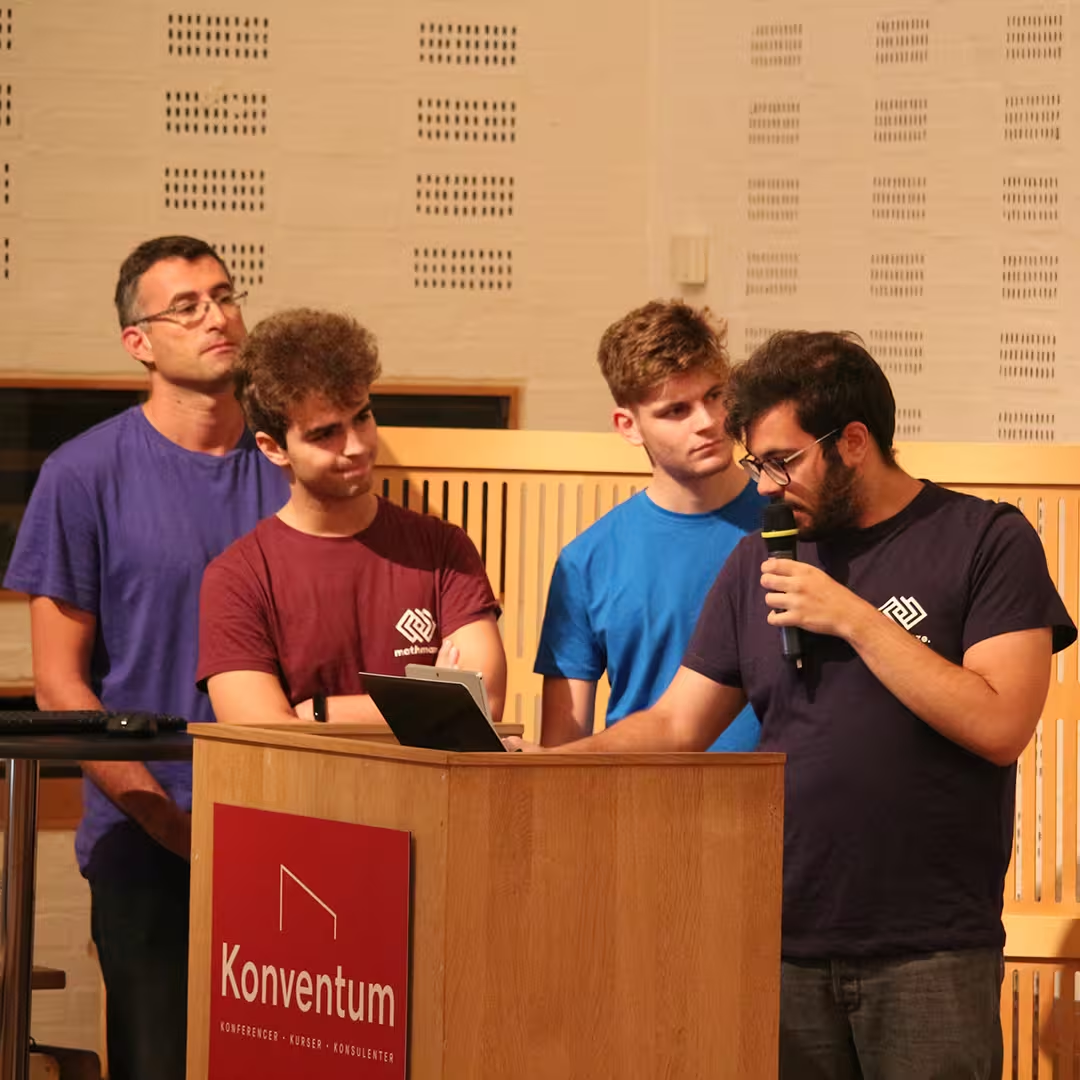
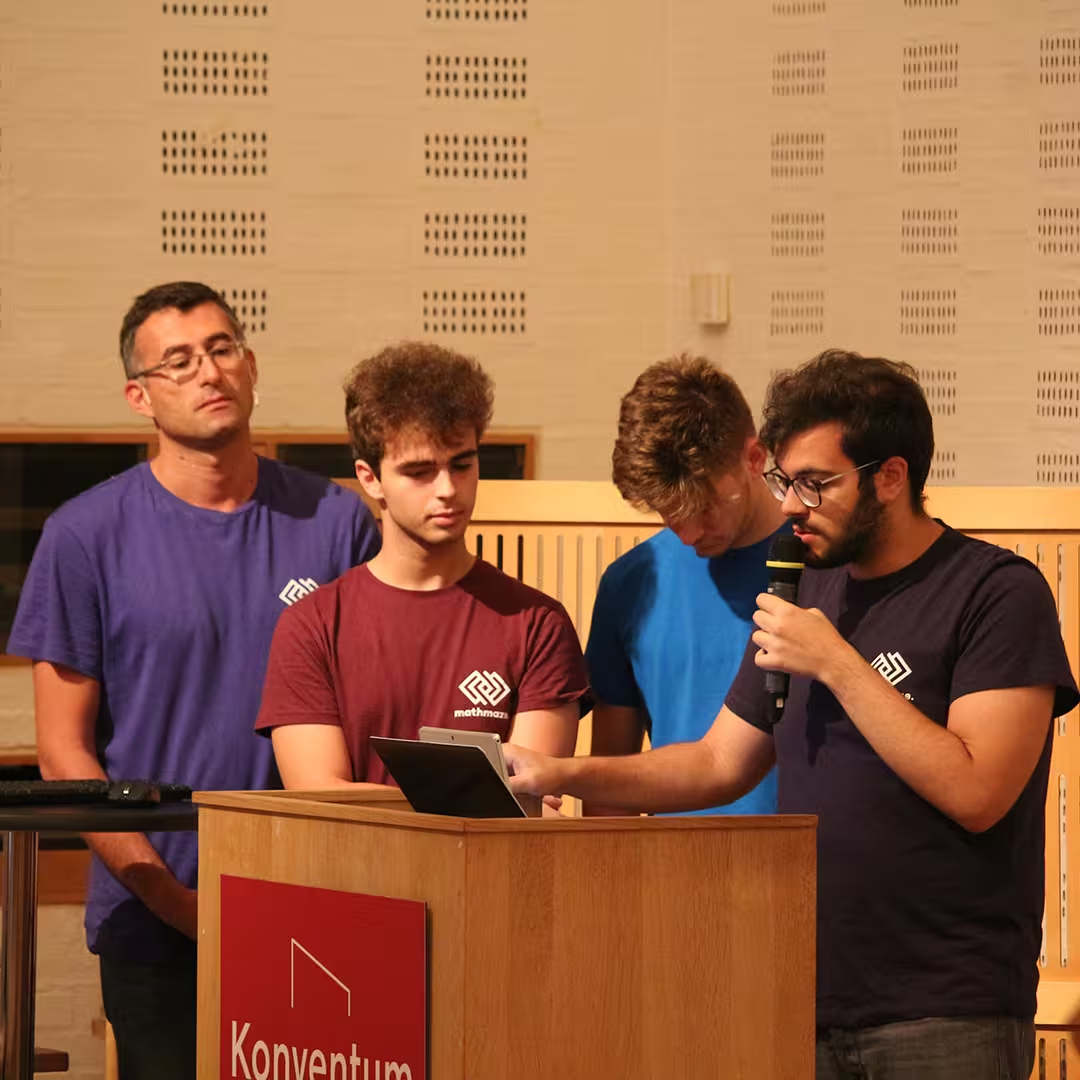
Roberto Minervini with Pietro Pio Palumbo, Gabriele Meroni and Alessandro Iaselli, Liceo Scientifico GB Grassi Saronno (Italy)
"I am a teacher, but I do not like teaching. In fact, I do not teach. The art of teaching without teaching is my way." (Tetsuya Miyamoto, the inventor of KenKen puzzle)
He also said that the essence of mathematics is to keep thinking. Ken Iverson said that mathematical notation is a tool of thought. From this, to think a solution to a problem using APL could be the best way to progress yourself in mathematical learning. Travel with Roberto and his students through puzzles, problem solving, APL coding and teaching.
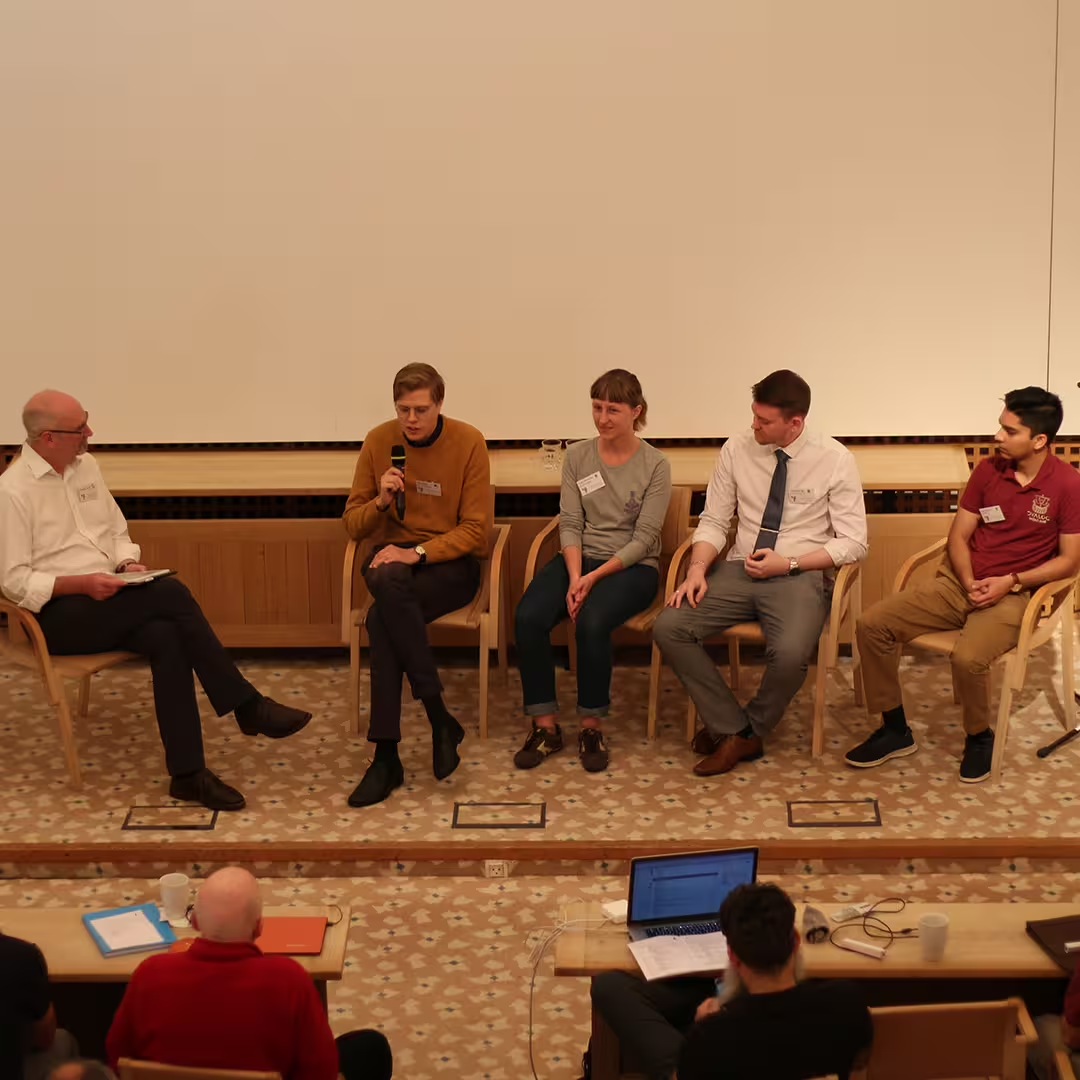
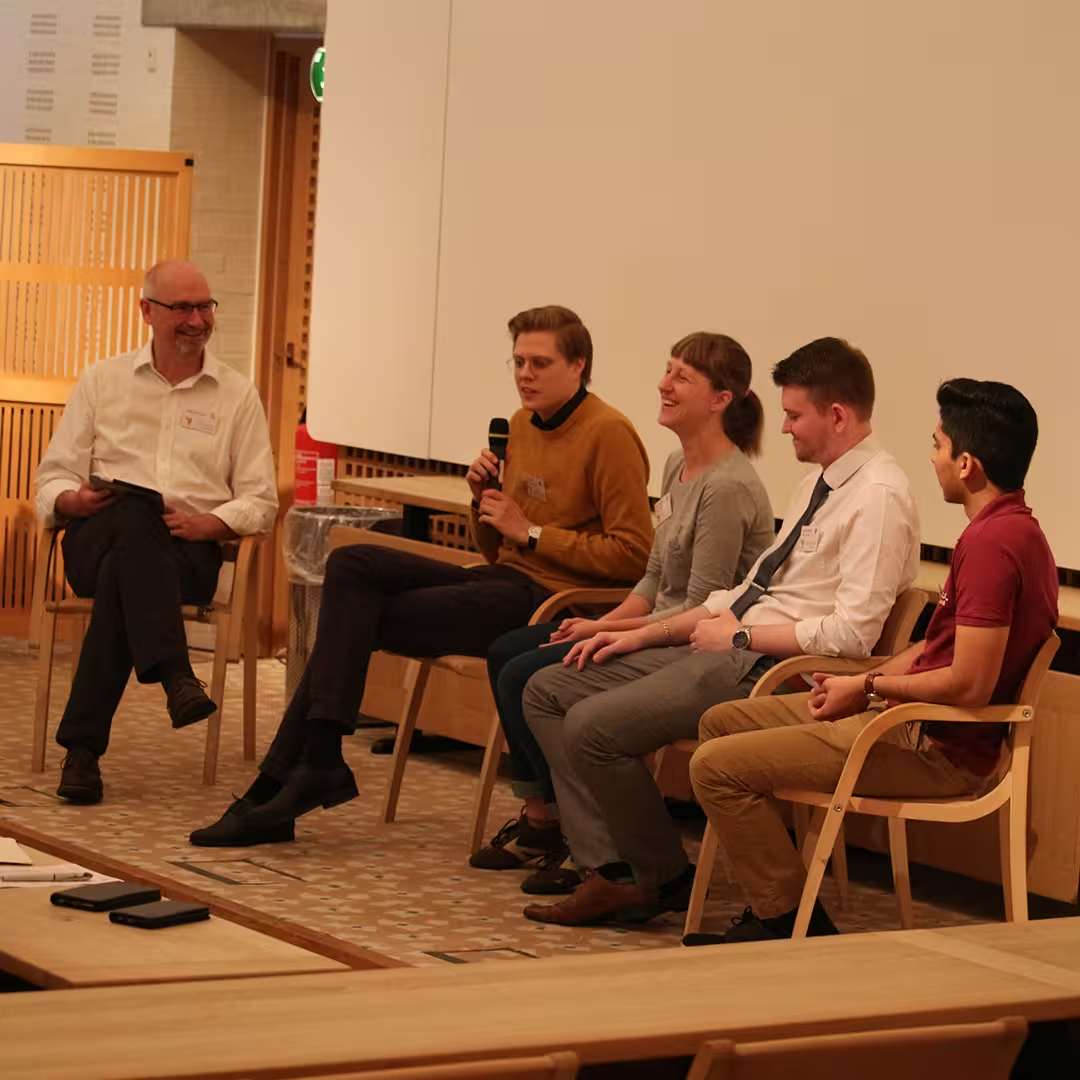
U12: Young APLers Panel summary | video (44 mins)
Host: Stephen Taylor
Panellists: Alve Björk (Uppsala University), James Heslip (Optima Systems Ltd), Josh David (Dyalog Ltd) and Yuliia Serhiienko (SimCorp Ukraine)
Some of the younger generation of APL users discuss how they first encountered APL, their perception/experience of the language and how they see its future.
U13: How I Won the APL Problem Solving Competition summary | slides (HTML) | video (39 mins)
Jamin Wu Monash University (Australia)
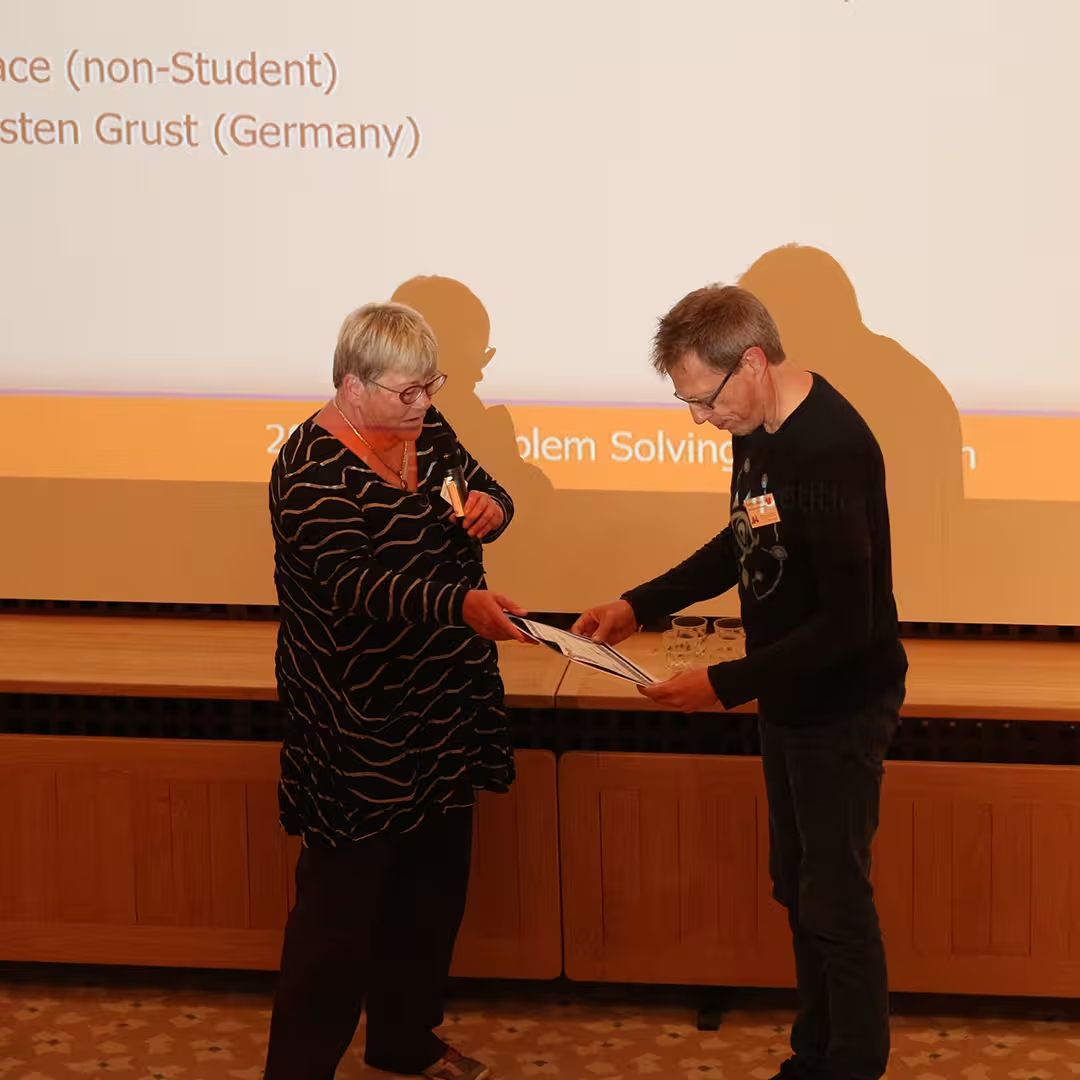
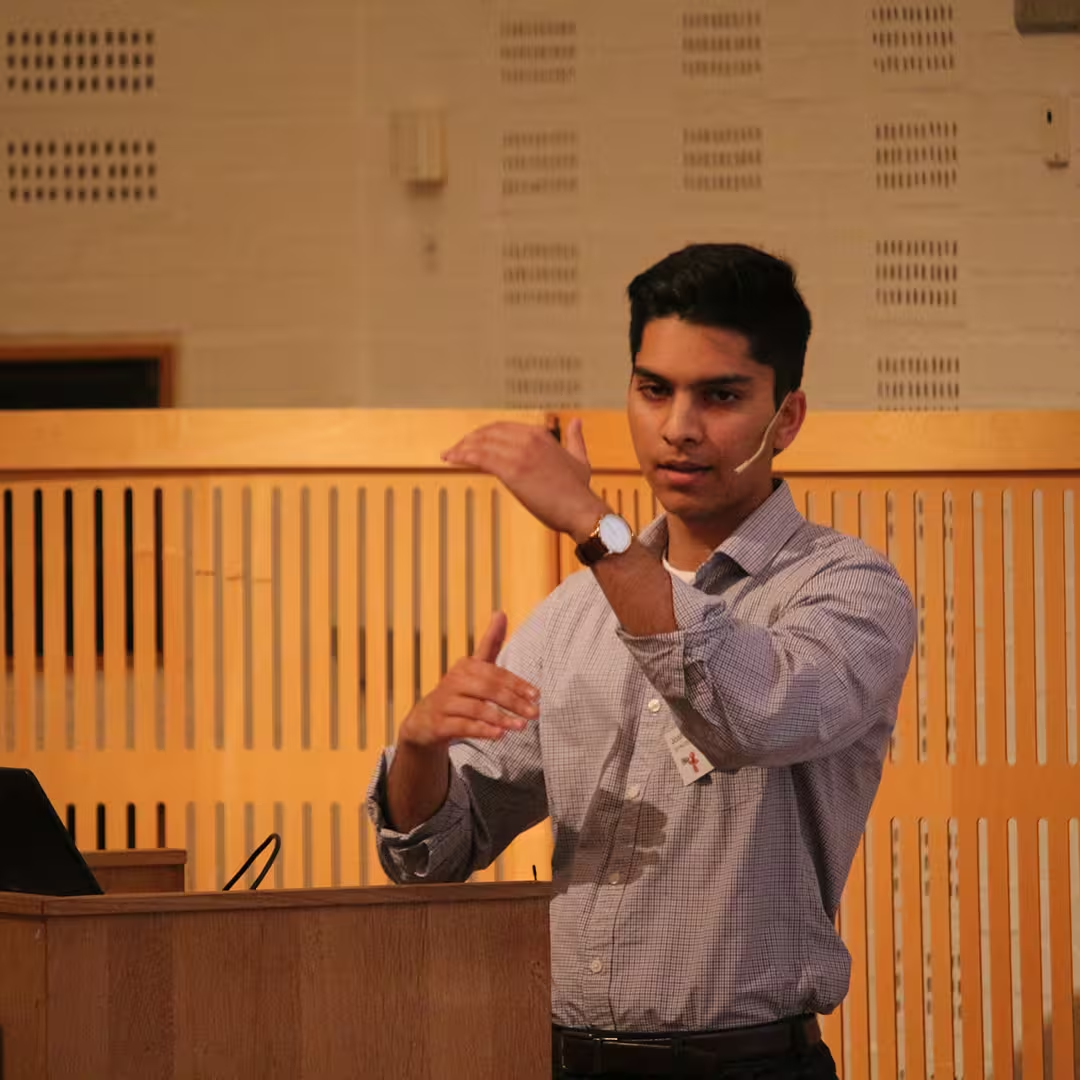
Jamin Wu is the grand prize winner of the eleventh annual APL Problem Solving Competition. Following the award ceremony, Jamin describes his experiences of APL/Dyalog and tells us how he managed to master enough of it to win the competition.
U14: APLcart: A Novel Approach to Finding Your Way in APL summary | slides (ZIP) | video (20 mins)
Adám Brudzewsky
There is plenty of documentation about what different parts of APL do. For example, in the IDE, you can just press the F1 key while the caret is pointing at a primitive or system function. But what if you know what you want to do, but don't know how to do so? Enter APLcart; the largest ever collection of short APL phrases.
Adám presents the interface and demonstrates how you can use APLcart to become a more effective APLer. Just don't upset it!
U15: The Irma Story summary | video (56 mins)
Tomas Gustafsson, Stormwind Ab Oy (Finland)
M/S Irma was lost in a sudden autumn storm between Finland and Sweden 50 years ago. Despite the massive search efforts, said to be the biggest ever in Finnish history, the Irma accident became a mystery. No distress signals were heard during that fatal autumn night, and Irma had chosen the weirdest routes. Everyone on board perished, including a two-year old boy and three wives of crewmen. Only one body was ever found, days later, at an unexpected location. Wreckage from the ship was discovered in the archipelago at multiple contradictory spots.
Irma was found in May 2019 by a group of enthusiasts. The reverse drifting patterns calculated using Dyalog played a crucial role in the success of the search.