User Presentations
U01: Premium Capping Schemes: An Important Steering Mechanism in German Health Insurance summary | slides (PDF) | handout (PDF) | video (58 mins)
Markos Mitsos, ERGO (Germany)
The calculation of premiums in German health insurance is based on some fundamental actuarial tables, an expected long term average interest and the premise that the individual premium shall not depend on aging itself, but only on the age at contract date. Once tight regulations are also taken into account, the business model of German health insurance is built around (huge) benefit reserves and security margins.
Its surplus stems mainly from interest on reserves (above the technical interest rate) and security margins. German law requires insurance companies to give back to the policyholders at least 80% of the entire surplus within 3 years. This has to be done after agreement with an independent trustee.
One of the two main ways to use the accumulated surplus is to cap premium increases during recalculation of premiums. Simulating this is complicated because capping is highly individual and needs the recalculation of all (individual) premiums as a pre-requisite. The calculations are straightforward but consist of a very large number of simple arithmetic operations.
The main challenge is to reliably achieve high accuracy, while keeping computation time in the limits needed for high flexibility. Furthermore it may not be obvious at all what a "fair" distribution of funds means and what the right capping scheme may look like, so a substantial amount of output information is needed.
Using APL, different capping models can be simulated on the basis of one premium recalculation simulation, using – as far as possible – 4-byte integer main arrays and pure vector and matrix calculations. The resulting computation times allow the simulation of many models. Furthermore, the costs of a model complete with error margins can be estimated within seconds.
U02: The Importance of Communication, Transparency and Practice summary | slides (PDF) | video (38 mins)
Gianfranco Alongi, Ericsson AB (Sweden)
To maximise our potential as individuals, teams and (ultimately) organisations, we have to take a step back from all of the enabling technologies, processes and tools that surround us and look inwards instead. In this presentation, Gianfranco shows us how to do this by touching on three subjects that start with "you and me" at the centre – Communication, Transparency and Practice.
U03: Mining the Depths of Excel – a Case Study in Objects and Arrays summary | slides (PDF) | video (38 mins)
Richard Procter, APL Borealis (Canada)
For those who need to move data back and forth between APL and Microsoft Excel, the options are growing. With Microsoft Office 2007, Excel and other Office documents adopted an open, XML-based file format. From an APL perspective, XML is nothing more than a delimited string of text – and we know how to handle such things in APL (in addition to which we have ?XML). Several object-oriented, .NET-driven class libraries exist for manipulating *.xlsx files without the need for Excel itself. These include Syncfusion's XLsIO, which is now provided by, and integrates easily with, Dyalog. Office Automation, using COM techniques, still works but has its limitations (and, of course, still requires Excel to be installed). The newer XML-based tools also have limitations, some of which can be overcome with familiar APL array-oriented magic.
U04: How to Save an Italian School with APL summary | slides (PPTX) | video (34 mins)
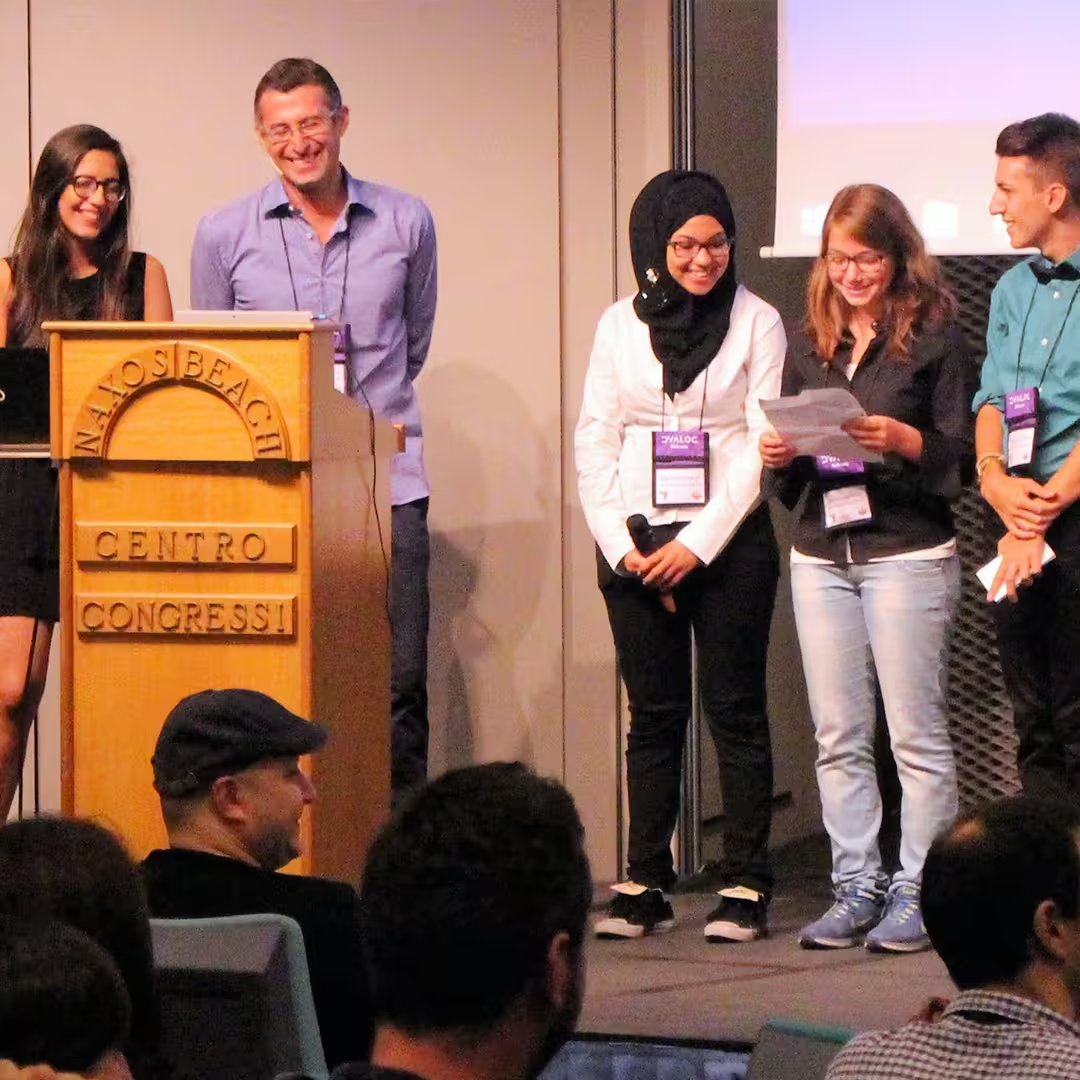
Roberto Minervini, Liceo Classico S. M. Legnani (Italy) with Arianna Greco, Samuele Luigi Di Gioia, Kariman Ahmed & Silvana Maria Belén Colman Cabrera
Could APL be a good approach to teaching maths/programming in a secondary school?
Roberto tried to answer this question, and he and some of his students tell the story of the APL course used at the school over the last few months. The scene is set with a description of how maths/programming was taught in the Liceo Classico S.M. Legnani secondary school before APL was involved, and the resultant problems. They then explore how maths (both teaching it and learning it) can be completely revolutionised with the introduction of APL.
U05: APL Really Can Make Us Healthy(er)! summary | slides (PDF) | video (40 mins)
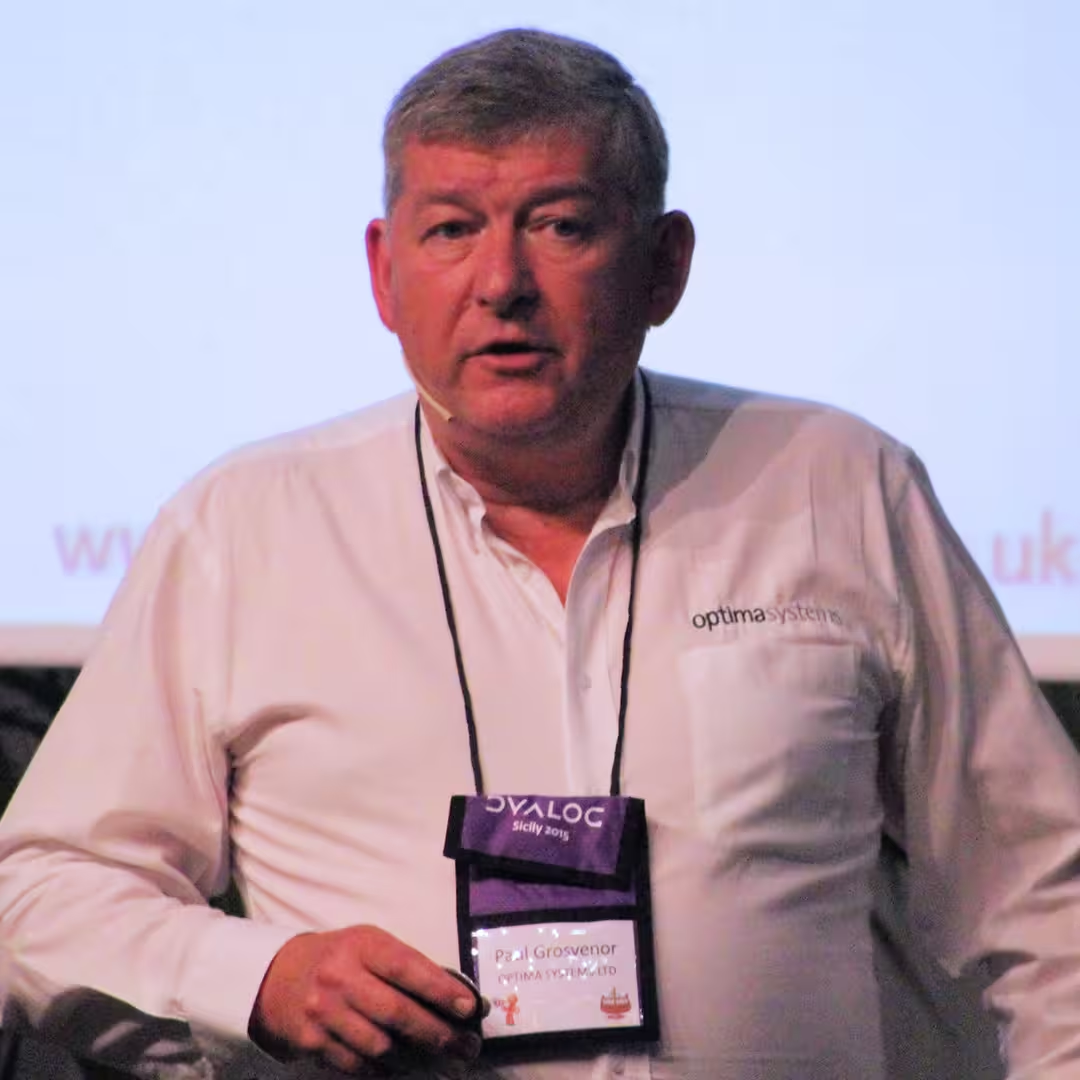
Paul Grosvenor, Optima Systems (U.K.)
Over the past 3 to 4, years Optima has been developing COSMOS; a tool designed to visualise data. Many of you will have seen COSMOS demonstrated in the past and may recall the way data is displayed as interlinking nodes. In this presentation Paul will discuss some of the more recent changes that have occurred to the product and how it is evolving in response to clinical need.
There are currently 800 cancer-related drugs awaiting clinical trials in the US but not enough people to trial them on. Even if there were, the identification of the right person for any particular drug is not trivial. Data is now being collected to assist in this process and we have an opportunity to make a real difference to the Clinical Study model; how do we identify and track suitable patients and how can we see what is, or is not, working in those trials?
What has come to light is that the requirements of the medical industry vary from company to company, drug to drug, and any analytical platform needs to be able to respond to those variations very fast. APL has, once again, come to the rescue and given us the ability to produce a platform that can be moulded to fit those needs quickly and easily.
However, all this does not come without its problems. As part of this talk, Paul will show the solutions to some of these problems as well as some problems that are yet to be answered...
U06: Ants, AJAX and APL summary | video (31 mins)
Ray Cannon, Cannon Computer Consultancy Ltd (U.K.)
Ray demonstrates "Ray Ant World", a visualisation of a match between two species of ants in a world containing two anthills, some food sources, and several obstacles, running under the rules laid out in the 2004 ICFP Programming Contest – "Dinner with Ambiants".
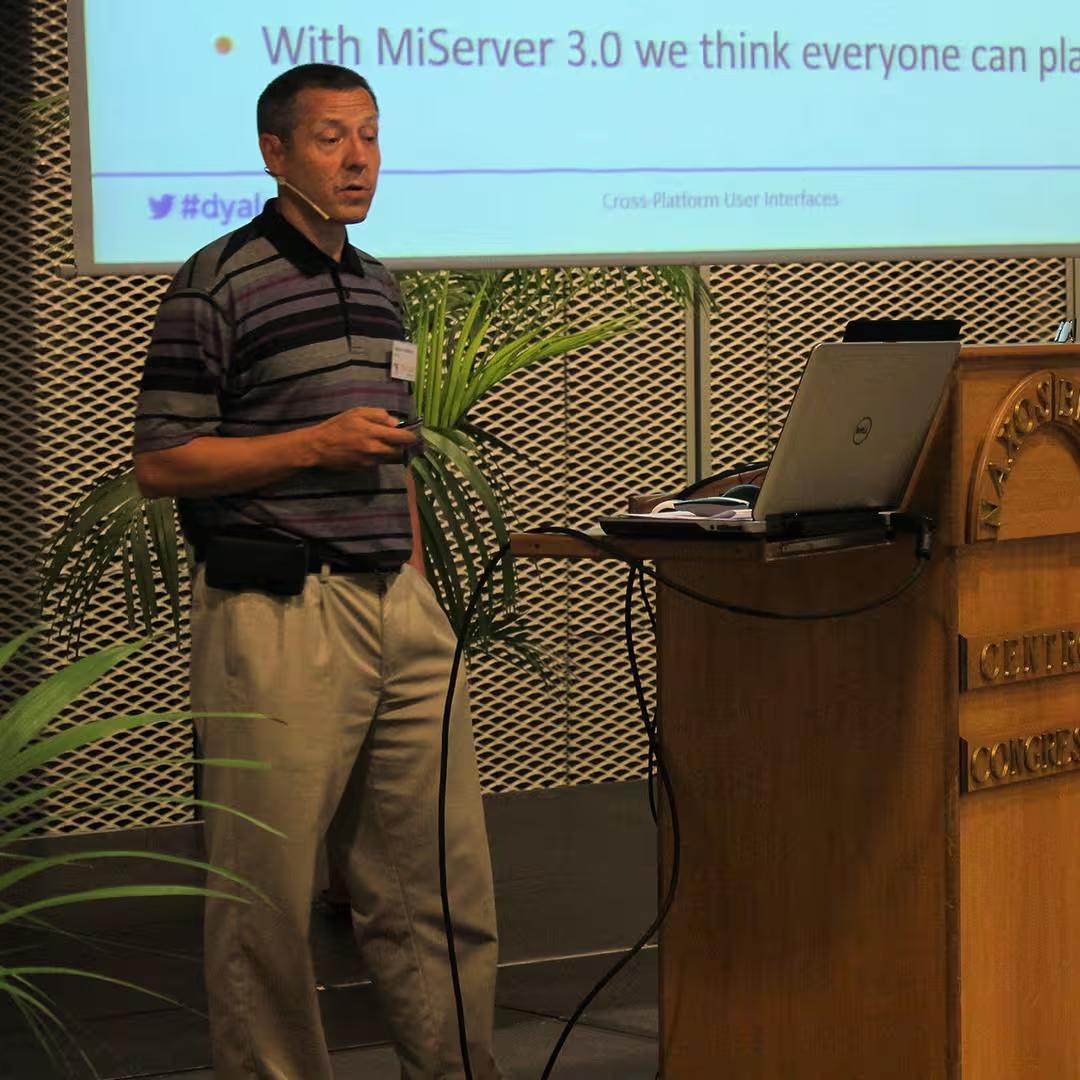
"Ray Ant World" is implemented in APL and utilises AJAX, JSON and JavaScript, all running through MiServer 3. APL's power is shown with a single line of code creating 20,000 lines of SVG (without a loop or "each").
U07: APL Array Notation summary | slides (PDF) | video (17 mins)
Phil Last, Independent APL Programmer (U.K.)
Phil explains why he thinks there's a big hole in APL notation and gives his own suggestions as to how to plug it.
U08: Data-bound Dashboard summary | video (16 mins)
Alexey Miroshnikov, InfoStroy Ltd (Russia)
Alexey demonstrates how a few lines of code using new features of Dyalog APL allow him to provide data visualisation of complex financial data by embedding the DevExpress "Dashboard" object into GAMA, InfoStroy's asset management product.
U09a: How I Won the APL Problem Solving Competition – Introduction and Prize Ceremony summary | slides (PPTX) | video (11 mins)
Brian Becker, APL Tools Group Manager
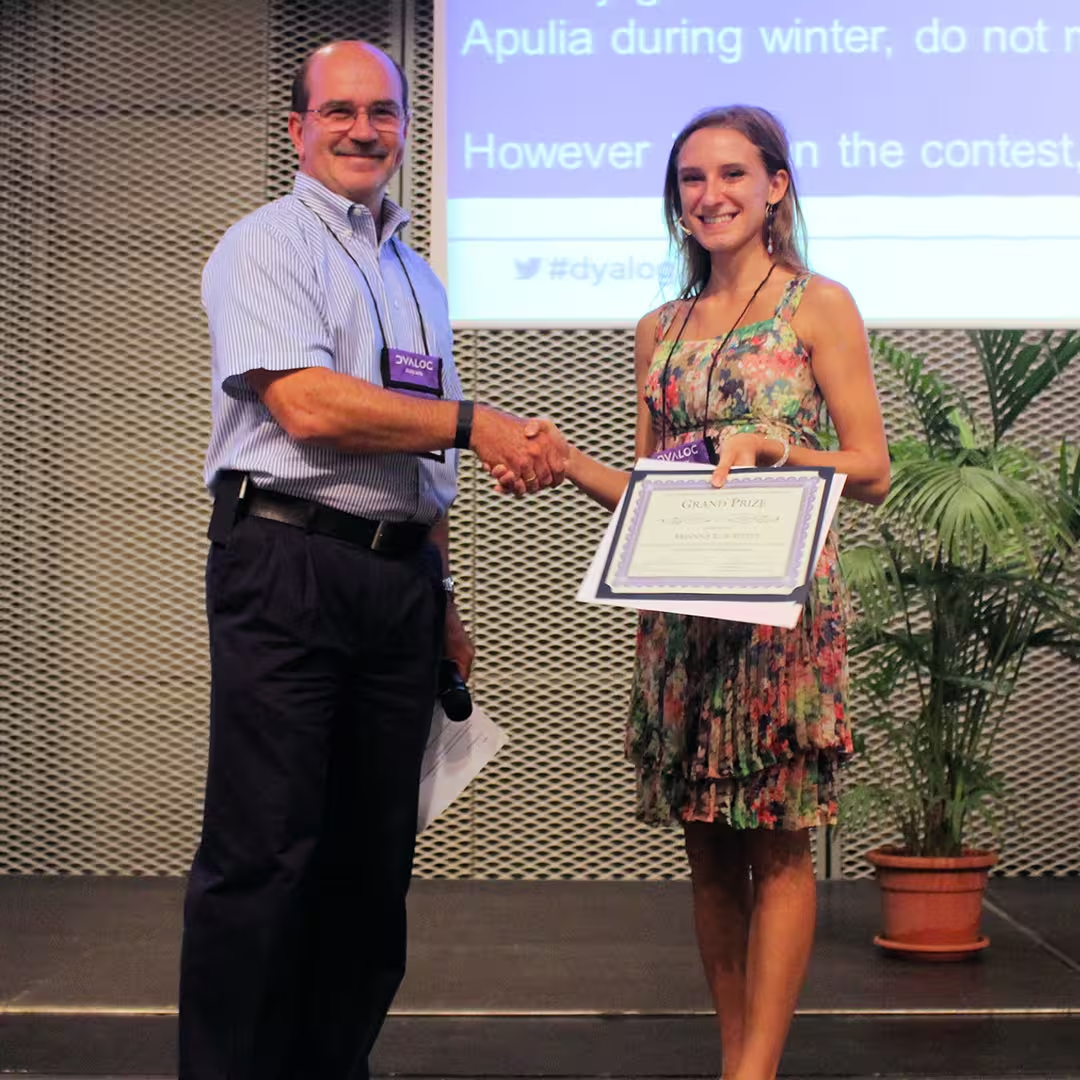
The seventh annual International APL Programming Contest took place earlier this year. Brian introduces the contest and grand prize winner and Walt Syzonenko (Fiserv) presents her with her certificate in the Prize Ceremony.
U09b: How I Won the APL Problem Solving Competition summary | slides (PDF) | video (37 mins)
Arianna Locatelli, Liceo Classico S. M. Legnani (Italy)
Arianna Locatelli is the grand prize winner of the seventh annual International APL Programming Contest. Following the prize ceremony, Arianna will describe her experiences of Dyalog and tell us how she managed to master enough of it to win the competition.
U10: Abstract Expressionism for Parallel Performance summary | slides (PDF) | handout (PDF) | paper (PDF)
Robert Bernecky, Snake Island Research (Canada)
Programming with abstract, mathematical expressions offers benefits including terser programs, easier communication of algorithms, ability to prove theorems about algorithms, increased parallelism, and improved programming productivity. Common belief is that higher levels of abstraction imply a larger semantic gap between the user and computer and, therefore, typically slower execution, whether sequential or parallel. In recent years, domain-specific languages have been shown to close this gap through sophisticated optimisations benefitting from domain-specific knowledge.
In this presentation, Robert demonstrates that the semantic gap can also be closed for non-domain-specific functional array languages, without requiring embedding of language-specific semantic knowledge into the compiler tool chain. He presents a simple example of APL-style SaC programs, compiled into C-code, that outperform equivalent C programs in both sequential and parallel (OpenMP) environments.
Robert also offer insights into abstract expressionist programming by comparing the characteristics and performance of a numerical relaxation benchmark written in C99, C99 with OpenMP directives, scheduling code, and pragmas, and in SaC, a functional array language. He compares three algorithmic styles: if/then/else, hand-optimised loop splitting, and an abstract, functional style whose roots lie in APL. SaC algorithms are shown to match or outperform serial C, and the hand-optimised and abstract SaC styles generate identical code, and so have identical performance. Furthermore, parallel SaC variants also outperform the best OpenMP C variant by up to a third, with no SaC source code modifications. Preserving an algorithm's abstract expression during optimisation opens the door to generation of radically different code for different architectures.
U11: Using Co-dfns to Accelerate APL Code summary
Aaron Hsu, Indiana University (U.S.A.)
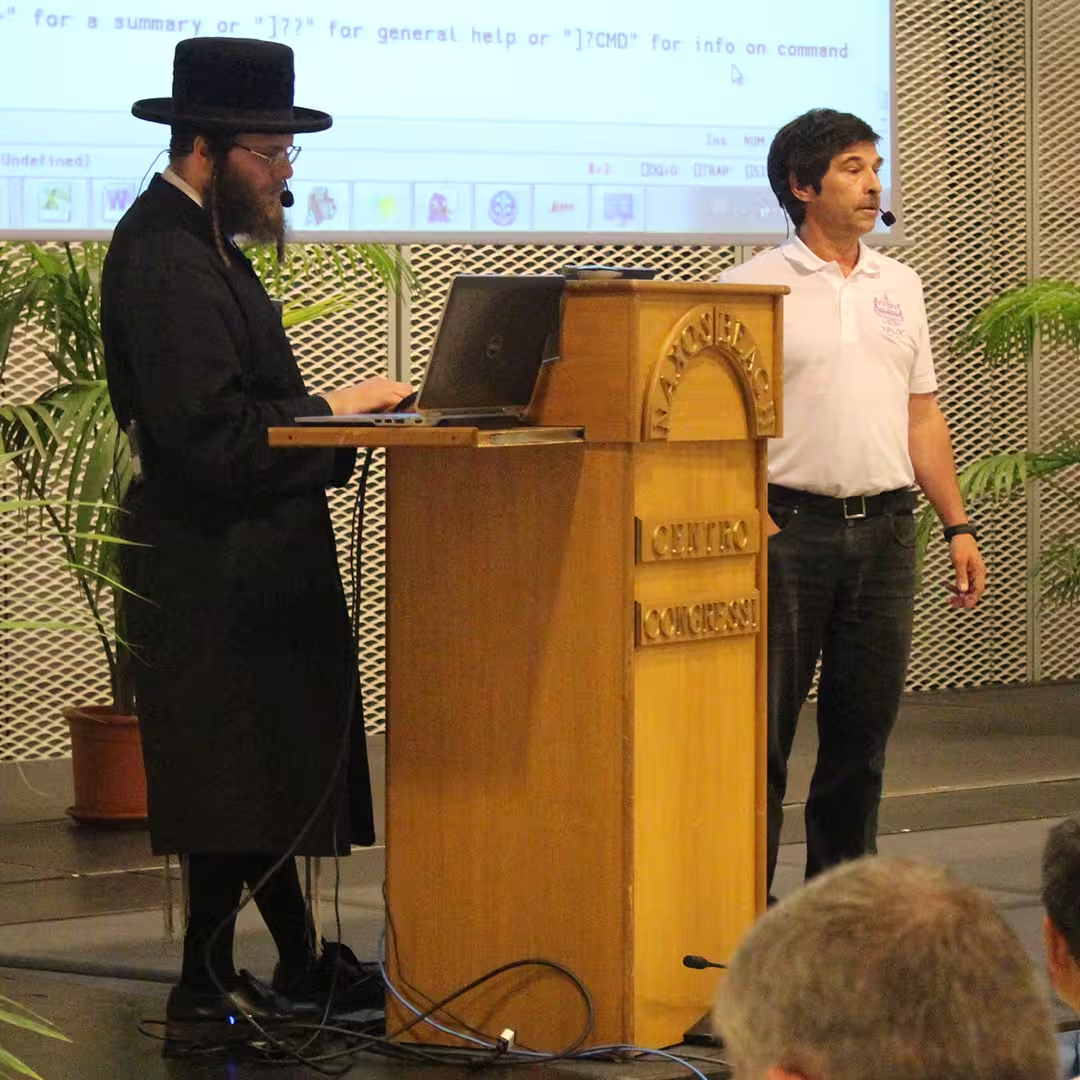
This live coding session will cover the expected capabilities of version 1 of the Co-dfns compiler project and demonstrate how to begin testing and experimenting with the compiler using the publicly-available pre-release versions. It will demonstrate how to take an existing APL program and integrate Co-dfns into it to best effect to assist in optimising the execution time of the code. It will also cover the currently-supported hardware platforms and give some guidance on choosing the right hardware platform to maximise performance. This session is designed to provide a practical introduction to using Co-dfns with their own code, from initial installation to final deployment of Co dfns compiled code.
U12: Troubles with Strange Data Structures and Database Growth summary | slides (PDF)| materials (ZIP)
Francesco Garue, APL Italiana (Italy)
Whenever software produces a number as the result of a computation, European insurance authorities require a lot of additional data to be saved so that the computation can be "reasonably" explained. If the data structure is inappropriate and/or redundant, then database growth can spiral out of control. Some of APL Italiana's customers began claiming that the volume of additional data was growing by an order of magnitude faster than the rest of the database and their disks were filling up, so something needed to be done – Francesco explains what was done both to change a particular data structure without re-writing the whole code base and to compress the data (no DCF file compression was available at that time).
U13: TamStat, a Statistical Package summary | slides_SM (PDF) | slides_JB (PPTX) | video (42 mins)
Steve Mansour, The Carlisle Group and University of Scranton (U.S.A.) & Jerry Brennan, Jerry M Brennan PhD Inc (U.S.A.)
TamStat is a statistical package written in Dyalog. What distinguishes it from other statistical programs such as R, Minitab and Excel are its natural use of arrays, operators and namespaces. While users have the option of using the APL character set, there are ASCII cover functions that allow them to use a traditional keyboard if they so desire. There is also an option to call R to do some calculations using the RConnect workspace. Recent developments include a function to import data from Excel, a Reference Card, a User Guide and a web interface using MiServer. The MiServer interface includes plotting routines, tabbed interactive tutorials and videos for learning statistics, using TamStat and programming in APL.
User Papers
CSV Processing | paper (PDF)
Eugene Ying, Fiserv (U.S.A.)